
After years of working on real lawns across the UK, one thing becomes very clear very quickly.
Most lawn problems are not caused by bad grass, poor soil, or even the weather. They are caused by how the lawn is being cut.
In 2026, robotic lawn mowers are no longer a novelty or a gadget. They are a proven lawn care tool that solves problems we see every week on real properties, from small family gardens to large country estates.
This guide is based on what actually happens to lawns over time, not manufacturer brochure claims.
Do robotic lawn mowers really improve lawn health?
Yes, and this is not theory. It is something you can see happening within weeks on most lawns. Traditional mowing removes a large amount of grass in one go. That shocks the plant, weakens roots, and compacts the soil under repeated foot traffic and heavy machinery. For best practice lawn care you should never cut more than 1/3 of the length of grass, however the reality for the average homeowner using a conventional mowers seems to be get it as short as possible to enable more time between cuts so it doesn’t get out of control again.
Robot lawn mowers work on the opposite principle. They cut little and often, mulching as they go. That single difference is the reason robotic mowing improves lawns rather than just keeping them short.
Patchy or Uneven Grass Growth
What we commonly see:
Lawns that look thin in some areas and thick in others and often areas which have been scalped.
Why it happens:
Infrequent mowing forces grass to constantly recover from stress instead of growing evenly. Unless the lawn is perfectly flat, any undulating areas which are mowed by a ride-on mower can cause scalping of the lawn when cut using a wide cutting deck.
What robotic mowers change:
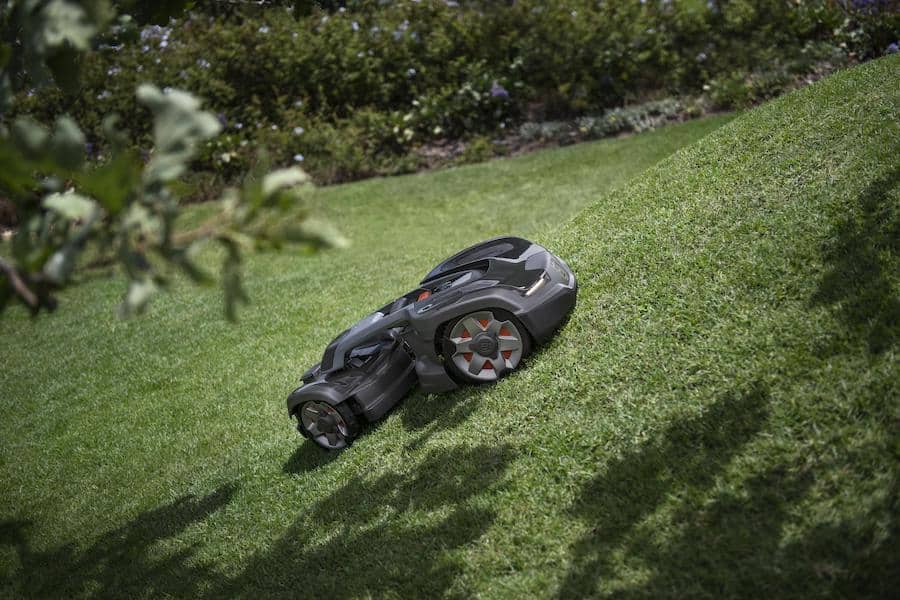
By maintaining a consistent height every day, robotic mowers encourage lateral growth. Over time the lawn thickens naturally and becomes more uniform without extra feeding or overseeding. Robot mowers have a much smaller cutting deck (and often floating) which prevents scalping completely.
Moss Slowly Taking Over
What we commonly see:
Moss spreading year after year, especially in shaded or damp areas.
Why it happens:
Moss thrives in compacted soil where grass is weak and struggling as well as compacted by heavy machinery.
What robotic mowers change:
Robotic mowers are lightweight and do not compact the soil. Grass becomes denser, airflow improves, and moss loses the conditions it relies on. Many customers see visible moss reduction within a single growing season.
Weeds Appearing Between Cuts
What we commonly see:
Lawns that look tidy right after mowing, then quickly fill with weeds.
Why it happens:
Weekly or fortnightly mowing gives weeds time to flower and seed.
What robotic mowers change:
Frequent cutting prevents weeds from ever reaching maturity. Grass stays dominant, which reduces the need for chemical treatments.
Do robotic lawn mowers reduce moss and weeds?
Yes, because they change the environment rather than masking the symptoms, without increasing chemical use.
• Stops weeds from flowering and spreading
• Encourages dense grass that outcompetes moss
• Improves soil structure and oxygen movement
• Mulch feeds and fertilises the lawn
Soil Compaction from Heavy Mowers
What we commonly see:
Heavy clay soil in the South East of England which feel hard underfoot and struggle in wet or dry conditions.
Why it happens:
Repeated passes from heavy petrol or ride on mowers compress the soil. Especially when the ground is softer in the winter months.
What robotic mowers change:
Reduced compaction allows roots to breathe properly, improves drainage, and supports healthier soil biology.
This is one of the biggest long term benefits, even though it is rarely talked about.
Lawn Stress During Hot or Dry Weather
What we commonly see:
Lawns browning quickly after mowing in warm spells.
Why it happens:
Cutting long grass removes too much leaf area, causing rapid moisture loss.
What robotic mowers change:
By trimming only a few millimetres at a time, robotic mowers help grass retain moisture and shade the soil, improving drought tolerance.
How much time do robotic lawn mowers actually save?
From real customer feedback, most homeowners spend 2 to 4 hours per week mowing, edging, cleaning equipment, and putting everything away.
Robotic lawn mowers remove this task entirely.
That typically saves:
• 10 to 15 hours per month
• Over 120 hours per year
And importantly, the lawn looks greener and healthier than it ever did before.
Lawns Looking Untidy Most of the Time
What we commonly see:
Lawns that only look good for a day or two after mowing.
Why it happens:
Grass grows quickly, especially in spring and early summer. Stripes fade quickly.
What robotic mowers change:
The lawn is maintained continuously. It always looks neat, trimmed, and presentable without planning or effort.
Noise and Neighbour Complaints
What we commonly see:
Restrictions on mowing times due to noise.
What robotic mowers change:
Robotic lawn mowers are extremely quiet and can operate early morning or through the night without disturbing neighbours.
Inconsistent Results from Gardeners or Contractors
What we commonly see:
Lawns cut too short to save time, with inconsistent results week to week.
What robotic mowers change:
Robotic mowers deliver the same result every day, regardless of weather, staffing, or schedules.
Robotic Lawn Mowers vs Traditional Mowing
Traditional mowing:
• Infrequent, aggressive cuts
• Soil compaction
• Variable results
• Ongoing time commitment
Robotic mowing:
• Frequent, gentle cutting
• Minimal soil impact
• Consistent lawn quality
• Fully automated
This difference is why robotic mowers actively improve lawns with each cut, rather than simply maintaining them.
Are robotic lawn mowers worth it in the UK climate?
From our 10 years of installation robot mowers in real gardens, yes.
Robotic lawn mowers perform particularly well in the UK because they:
• Adapt to rapid spring growth
• Avoid stressing grass during warm spells
• Improve drainage and resilience in wet conditions
For small, medium and large lawns, they are one of the most effective long term garden upgrades available.
Where to Buy and Install a Robotic Lawn Mower in the UK
Installation quality matters as much as the mower itself. Lawn layout, slopes, trees, and soil conditions all affect long term performance. That is why homeowners looking for trusted advice and proper installation choose Platts Robotics.
With a decade of hands-on experience and thousands of real installations, Platts Robotics focuses on systems that actually work in UK gardens, not just what looks good on paper.
So if your lawn feels like constant effort with mixed results, the issue is rarely the grass itself. It is the mowing method. Robotic lawn mowers change how lawns grow, not just how they are cut. That is why, once people experience the difference, they rarely go back.