
Leatherjackets are now one of the most damaging lawn pests affecting UK homeowners. Once considered an occasional seasonal issue, they have become a persistent and increasingly widespread problem, particularly on domestic lawns that struggle with thinning grass, poor drainage, or patchy growth.
As we move through 2026, leatherjacket infestations are becoming more severe due to milder winters, wetter autumns, and stressed lawn environments. Understanding why they thrive and how modern lawn care methods can reduce their impact is now essential for anyone wanting a healthy lawn.
This guide explains what leatherjackets are, why they are increasing across the UK, how they damage lawns, and what genuinely helps prevent long-term problems.
What Are Leatherjackets?
Leatherjackets are the larval stage of crane flies, commonly referred to in the UK as daddy longlegs. While the adult flies are harmless, their larvae live beneath the soil surface and feed on grass roots and crowns. They are most active from autumn through spring, feeding slowly but persistently. Damage often becomes visible in spring, just as lawns should be recovering and growing strongly.
Why Leatherjacket Problems Are Increasing in the UK
Leatherjackets are not appearing more frequently by chance. Several long-term trends are contributing to their rise.
Milder Winters -Historically, prolonged frost reduced larval survival. Recent UK winters have been noticeably milder, allowing far more leatherjackets to survive through to spring.
Wetter Autumns – Crane flies lay eggs in late summer and autumn, favouring damp, soft soil. Extended wet periods significantly improve egg survival rates.
Lawn Stress and Soil Compaction – Modern lawns often suffer from:
• Compacted soil
• Poor drainage
• Weak or shallow root systems
• Inconsistent mowing practices
These conditions do not cause leatherjackets, but they dramatically increase the damage they cause.
How Leatherjackets Damage Lawns
Leatherjackets feed below the surface, gradually severing grass roots. Lawns with strong root systems can tolerate some feeding. Lawns that are already stressed cannot.
Common symptoms include:
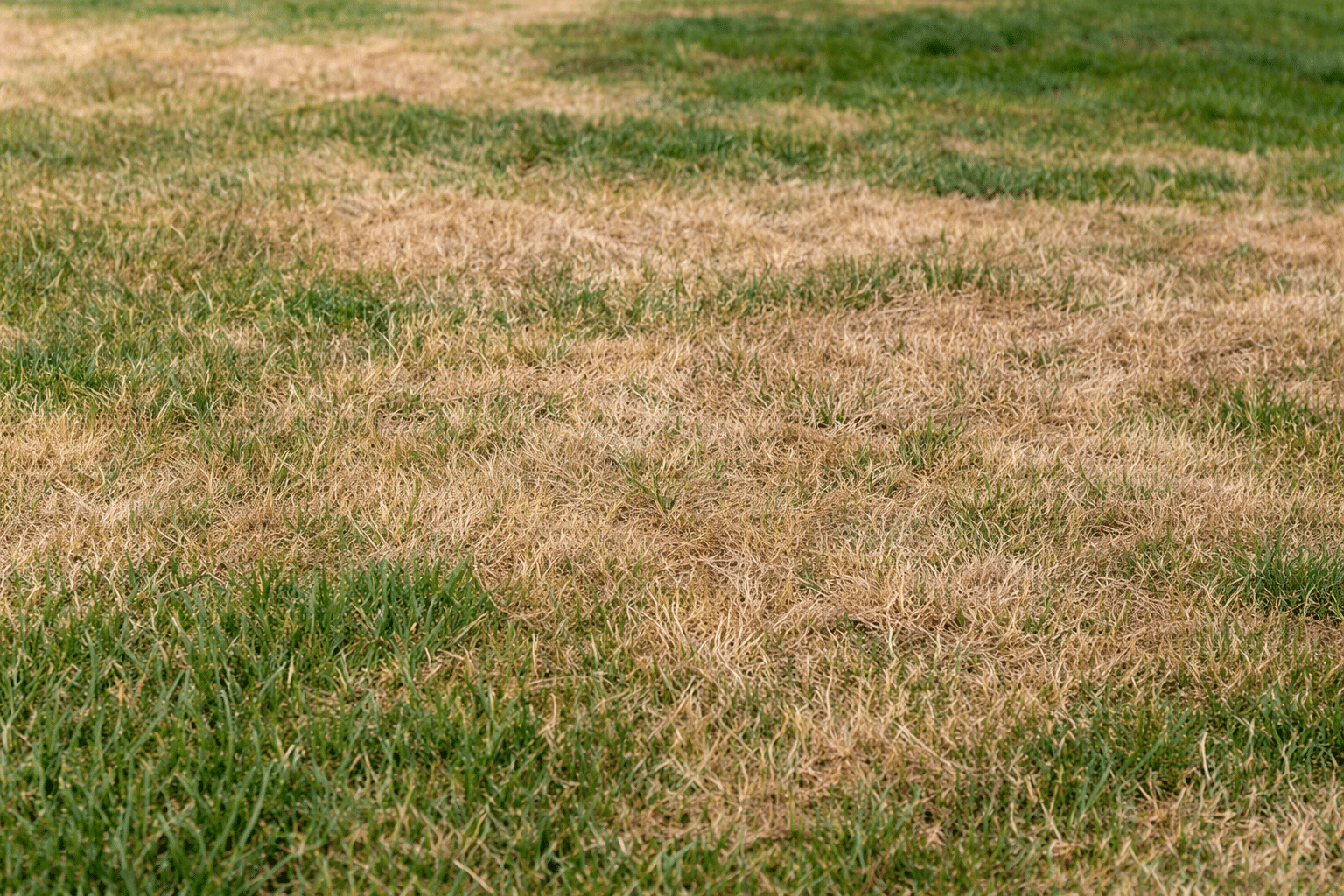
• Yellowing or thinning grass
• Turf that feels soft or spongy
• Grass that lifts easily from the soil
• Patchy die-back in spring
• Birds, foxes, or badgers tearing at the lawn to reach larvae
In almost all severe cases, underlying lawn weakness is the real issue.
When Leatherjackets Cause the Most Damage
Autumn: Eggs hatch and larvae begin feeding
Winter: Feeding continues slowly
Spring: Peak damage period as grass tries to regrow
Early Summer: Larvae pupate into crane flies
By the time spring damage is visible, root loss has often already occurred.
Proven Leatherjacket Control Methods in 2026
Biological Control (Nematodes)
Beneficial nematodes remain the most effective direct treatment available in the UK.
They:
• Target leatherjacket larvae in the soil
• Are safe for pets, wildlife, and pollinators
• Require correct soil temperature and moisture to work effectively
Best application windows:
• September-October
• March-April (if infestations are confirmed)
However, biological control alone does not address why damage becomes severe.
Lawn Health Is the Key to Long-Term Prevention
Leatherjackets do the most harm in lawns that are already compromised. Improving lawn resilience is the most reliable long-term strategy.
Healthy lawns share common characteristics:
• Deep, well-oxygenated root systems
• Free-draining soil
• Dense turf coverage
• Consistent, low-stress mowing
This is where modern mowing methods, including robotic lawn mowers, play an important preventative role.
How Robotic Lawn Mowers Help Prevent Leatherjacket Damage
Robotic lawn mowers do not eliminate leatherjackets directly. Instead, they remove several of the conditions that allow leatherjacket feeding to turn into visible lawn damage.
Lower Soil Compaction
Soil compaction is one of the most significant but overlooked contributors to leatherjacket damage in UK lawns.
Compaction is primarily caused by heavy mowing equipment, including:
• Ride-on mowers
• Petrol walk-behind mowers
• Repeated mowing along the same wheel paths, especially on damp ground
Each pass of a heavy machine compresses the soil, collapsing the tiny air spaces between soil particles. Over time, this creates a dense surface layer that roots struggle to penetrate and water struggles to drain through.
Compacted soil leads to:
• Reduced oxygen flow to roots
• Poor drainage and surface water retention
• Shallow, weakened root systems
• Suppressed soil biology and microbial activity
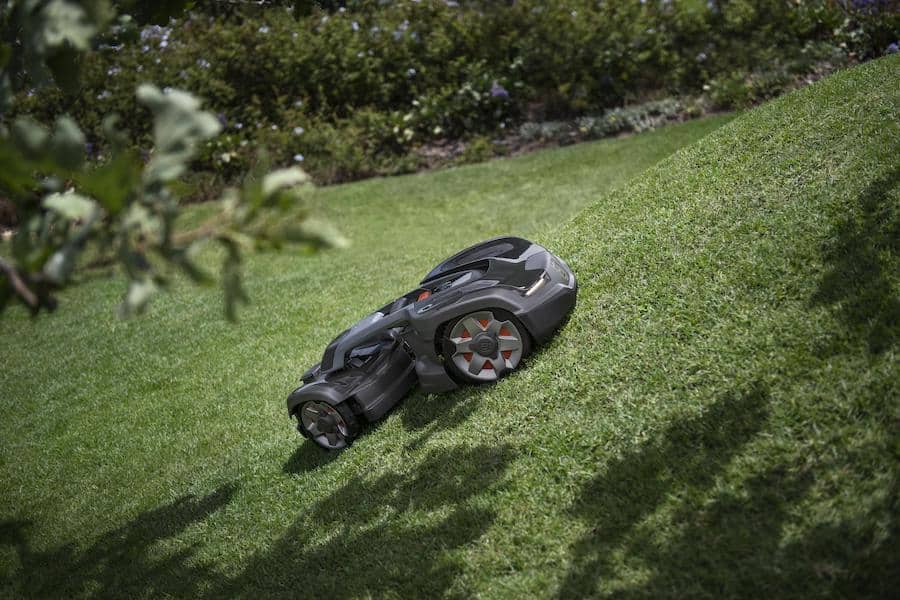
Robotic mowers such as the Husqvarna 410VE are extremely lightweight compared to traditional petrol and ride-on machines. Their low ground pressure dramatically reduces soil compression, even with frequent use.
Reduced compaction means:
• Better oxygen flow to roots
Grass roots require oxygen to function and grow. Less-compacted soil retains more air-filled pore space, allowing oxygen to move freely into the root zone. Healthier roots produce stronger plants that are better able to tolerate minor pest feeding.
• Healthier soil biology
Beneficial soil organisms – bacteria, fungi, and microbes thrive in well-aerated soils. These organisms help cycle nutrients, support root development, and improve soil structure. Compaction suppresses this biology; reduced compaction supports it.
• Less favourable conditions for larvae survival and damage
Severe leatherjacket damage occurs when lawns are weak, waterlogged, and shallow-rooted. Less-compacted soil drains better, supports deeper roots, and holds turf together more firmly.
While larvae may still be present, they are far less likely to cause widespread turf collapse, and the lawn recovers more quickly from any feeding.
This is why leatherjacket damage is often worst along mowing lines, turning areas, and sections maintained with heavier machinery.
Consistent Cutting Without Lawn Stress
Traditional mowing often removes too much grass in one session, placing the plant under stress and slowing root growth.
Robotic mowers cut little and often, keeping grass consistently within its ideal height range. This promotes:
• Continuous root development
• Denser turf at the base
• Fewer weak or bare patches
Dense turf protects the soil surface and grass crowns, limiting the impact of root-feeding larvae.
Fine Mulching Supports Soil Health and Recovery
Robotic mowers finely mulch grass clippings and return them to the lawn. This provides a steady return of organic material and nutrients to the soil surface.
Regular mulching:
• Supports soil microbial activity
• Improves nutrient availability
• Encourages faster recovery from pest pressure
Lawns that recover quickly are far less likely to suffer lasting leatherjacket damage.
Reduced Attraction for Egg Laying
Crane flies prefer to lay eggs in lawns that are:
• Damp and compacted
• Thin or patchy
• Soft at the surface
By maintaining better soil structure and dense turf coverage, robotic mowing helps create conditions that are less attractive for egg laying, reducing future larval populations over time.
What Does Not Work
• Surface insect sprays
• Random fertiliser use
• Ignoring early warning signs
• Waiting until spring damage is severe
• Continuing heavy mowing on stressed turf
The 2026 Reality: Prevention Beats Cure
Leatherjackets are now a structural lawn issue, not just a seasonal pest. Homeowners who focus only on reactive treatments will continue to see repeated damage.
The most resilient UK lawns now rely on:
1. Early biological control when required
2. Strong soil structure and root health
3. Consistent, low-impact mowing practices
Frequently Asked Questions About Leatherjackets in Lawns
How do I know if my lawn has leatherjackets?
Signs include yellowing grass, spongy turf, grass lifting easily, and increased bird activity. Damage often appears in spring even though feeding began months earlier.
When is the best time to treat leatherjackets in the UK?
Early autumn or early spring, when soil temperatures exceed 12°C and larvae are active near the surface.
Do leatherjackets kill grass permanently?
They destroy roots rather than blades. Lawns with weak root systems may die back completely, while healthier lawns often recover.
Why is leatherjacket damage worse on some lawns?
Compacted soil, poor drainage, shallow roots, and heavy mowing equipment all increase lawn stress and vulnerability.
Do robotic lawn mowers help prevent leatherjackets?
They don’t eliminate larvae, but they reduce compaction, support deeper roots, and maintain dense turf – all of which reduce damage.
Are leatherjackets becoming more common in the UK?
Yes. Milder winters and wetter autumns have significantly increased survival rates.
The Best Way to Prevent Leatherjackets in 2026
Leatherjackets are part of the modern UK lawn ecosystem. The goal is not total eradication, but preventing their presence from turning into visible damage.
The most effective prevention strategy combines:
• Early biological control when required
• Reduced soil compaction
• Consistent, low-impact mowing
• Strong root and soil health
A healthier lawn won’t eliminate leatherjackets completely – but it will dramatically reduce the damage they cause.